

Best of Namibia and Botswana safari – Full Itinerary
Safari starts in Windhoek and ends in Kasane
Duration: 25 days


Day 1: Arrival in Windhoek.
Welcome to Namibia! After arriving at Hosea Kutako International Airport outside the country’s capital city of Windhoek, a representative will be waiting for you in the arrivals hall of the airport with your name on a signboard. After loading your luggage into the vehicle, it is a short 45-minute drive to Windhoek to your hotel.
Magnificent mountains, wide valleys, lush farmlands, resorts, and opulent guest farms surround Namibia’s capital, Windhoek. The Greater Windhoek region, which encircles this vibrant metropolis, is distinguished by its rocky hills, heavy scrub, expansive valleys, and beautiful savannah. Windhoek is located in the Khomas Hochland plateau region between the Auas and Eros mountain ranges at 1,700 meters (5,600 feet) above sea level, making it the 12th highest capital in the world. With a population of over 400,000 and a low population density of just 63 per square kilometer. Windhoek also enjoys more than 300 sunny days annually.
After dinner at one of Windhoek’s eateries, you’ll recuperate for the upcoming excursion!
Day 2: Kalahari Desert.
Following a delicious breakfast this morning, we will go to the Kalahari. Although our trip takes almost three hours, it is certainly worth the time! We are traveling south to our first destination, a lodge located approximately 30 kilometers (18 miles) from Mariental on the eastern fringe of the Namib desert. The small town of Mariental is significant because it is next to Namibia’s second-largest dam, the Hardap Dam, which regulates the flow of the Fish River and supplies a huge area with valuable water.
Upon your arrival at our lodge, you will discover the renowned red sands of the Kalahari. You have the option to enjoy an afternoon game drive in the private reserve surrounding the lodge. We will seek out Gemsbok, Common Wildebeest, Common Ostrich, Cape Porcupine, Sociable Weavers with their impressive nests, Steenbok, Springbok, Kori Bustard, Hartebeest, and other fascinating wildlife and plant life. We will be sure to pause and take in the stunning sunset, which is among the most beautiful in the Kalahari.
The lodge features a lovely pool to help you cool down, and the chef will make sure your first taste of Namibian cuisine is unforgettable! This is truly the perfect way to experience the beauty of southern Namibia.
Day 3: Sossusvlei, Dead Vlei and Sesriem Canyon (the Namib Desert).
We will rise early and, after breakfast, set off for our morning tour of the surrounding desert landscape. A local expert will guide us through the unique fauna and flora that not only survive but thrive in this harsh and seemingly barren environment. We may encounter fascinating plants, geckos, lizards, snakes, and small mammals while also learning about the area’s geology and history. Alternatively, we can arrange for a morning of hiking in the stunning Aus mountains.
After lunch, we will head to Sossusvlei, driving through the breathtaking NamibRand Nature Reserve. This private reserve covers 2,150 km² (830 sq mi) and borders the Namib-Naukluft National Park to the west and the Nubib mountains to the east. It has been designated as Africa’s first International Dark Sky Reserve (IDSR), making it one of the best locations globally for stargazing.
Today’s total drive time is about 5 hours, but the scenery will be magnificent. We should arrive at our lodge by late afternoon, where we can enjoy a delicious dinner and get to bed early in preparation for an early start the next day.
Day 4: Sossusvlei and Scenic flight.
After an early breakfast we will depart for an exciting morning excursion to Sossusvlei and nearby Dead Vlei, where we will spend a couple of hours. Sossusvlei is where you will find the iconic red sand dunes of the Namib. The clear blue skies contrast with the giant red sand dunes to make this one of the natural wonders of Africa and a photographer’s heaven. Sossusvlei itself is actually the pan or valley floor that we will park our vehicle on, and is surrounded by massive dunes on almost all sides. We will have plenty of time to enjoy some of the many highlights that surrounds Sossusvlei itself:
- Dune 45, the most photographed dune on earth (situated 45 km past Sesriem on the road to Sossusvlei)
- Hiddenvlei, perfect if you are looking for solitude in the desert
- The magnificently tall Big Daddy dune
- Deadvlei, a paradise for photographers, as it is punctuated by blackened, dead acacia trees, in vivid contrast to the shiny white of the salty floor of the pan and the intense orange of the dunes
- Sesriem Canyon, a narrow gorge of 1 km long and up to 30 m deep slashed into the earth by the Tsauchab river millions of years ago. The name derives from the Afrikaans for the 6 lengths of ropes that were needed to haul water out of the gorge to the top with containers in days gone by.
We will head back to the lodge for lunch in anticipation of our afternoon scenic flight over Sossusvlei. This will allow for great photographic opportunities as the sunsets over the desert.
We will depart from the local airstrip, once in the air the aircraft makes a left turn, flying around a mountain to offer a stunning view of Sesriem Canyon. From there, the flight heads southwest, entering the dune corridor and circling Dune 45.
Continuing towards Deadvlei, passengers will also get a glimpse of Hiddenvlei, Cessna Pan, and the white mountains. A turnaround over Deadvlei provides excellent photo opportunities. Next, the aircraft heads toward Sossusvlei, circling the area before making its way towards the coast.
The flight then takes a north westerly direction towards the diamond camps, descending to circle over the southern, middle, and northern camps.
Continuing west toward the coast, the aircraft will descend, providing views of the vast salt pans to the left and various seal colonies along the way to the Eduard Bohlen shipwreck.
After passing the shipwreck, the aircraft heads back toward Elim Dune, ascending as it nears the dune. From this vantage point, the towering dunes become visible up close. Along the way to Elim Dune, there’s a chance to see the iconic Fairy Circles on the grassy plains, as well as potential sightings of game like Oryx, Springbok, and Ostriches. After a final turn over Elim Dune, the aircraft returns to the airstrip for landing.
We will then head back to the lodge, catch our breath after the stunning flight and enjoy a great dinner. Life could not get better than this.
Day 5: Sossusvlei onwards to Swakopmund.
After a leisurely breakfast at the lodge, we will set off for the coastal town of Swakopmund, traveling through the expansive Namib-Naukluft Park. The scenic drive will take around four hours, and if time permits, we will stop in the charming desert oasis of Solitaire for a taste of the famous Apple Pie—a true Namibian tradition not to be missed.
Our entire journey takes us through the Namib Sand Sea, one of Namibia’s two UNESCO World Heritage Sites. This coastal desert is the only one in the world with extensive dune fields influenced by fog. Spanning over three million hectares, it features gravel plains, coastal flats, rocky hills, a coastal lagoon, and ephemeral rivers, creating a landscape of breathtaking beauty. The fog provides the primary water source for the region, supporting a unique environment where endemic invertebrates, reptiles, and mammals have adapted to various microhabitats and ecological niches.
Swakopmund is known as Namibia’s adventure and sports capital, but there is much more to this town than just outdoor activities. Nestled between the hot, dry desert and the cool Atlantic Ocean, Swakop (as it’s affectionately called by locals) stands out as one of Africa’s most intriguing colonial towns. The town is a vibrant blend of South African, Namibian, and German cultures, reflected in its architecture, language, cuisine, and way of life. For thrill-seekers, there’s no shortage of exciting activities, including quad biking, sandboarding, kitesurfing, skydiving, fishing, mountain biking, and scenic coastal flights. Swakopmund is the country’s most popular holiday spot, attracting both locals and visitors with its relaxed vibe, excellent restaurants, lively coffee shops, a wide range of activities, and a temperate climate. We’ll be staying here for the next two nights.
Just a short distance away is Walvis Bay, Namibia’s major port, known for its lagoon and abundant birdlife. The Walvis Bay lagoon and salt pans are one of southern Africa’s most significant coastal wetlands, hosting over 150,000 migratory birds each summer. The area is also home to a diverse range of wildlife, including 11 types of chameleons, lizards, geckos, and several mammal species, such as the Pygmy Rock Mouse and Littledale’s Whistling Rat.
We will arrive in Swakopmund in the afternoon, giving us time for a leisurely stroll around the town or perhaps an optional adventure activity. Afterward, we will enjoy dinner at one of the town’s top restaurants and settle in for a restful night—tomorrow promises to be another exciting day!
Day 6: Living Desert Experience (Swakopmund).
After breakfast in Swakopmund, we will head out for a Living Desert Experience, a truly unique adventure!
Accompanied by a local expert, we’ll explore the fascinating wildlife of the Namib Desert. Our guide will help us spot and learn about the diverse creatures that thrive in this arid, seemingly barren environment, including geckos, scorpions, snakes, lizards, birds, and beetles, as well as the remarkable plant life that survives here. Some of the special species we may encounter include the Namib Sand Gecko, Namaqua Chameleon, Shovel-snouted Lizard, Tractrac Chat, and even Peringuey’s Adder.
After returning to Swakopmund, we will enjoy a relaxing lunch and have the chance to explore the town, with optional activities like quad biking or sandboarding.
Dinner will be enjoyed at a local restaurant watching the sun setting over the bay.
Day 7: Skeleton Coast and Damaraland.
Today, we continue our safari heading north along the Skeleton Coast. This stark and aptly named region is one of the most unique and remote coastal wildernesses in the world, covering roughly a third of Namibia’s extensive coastline. Historically, it has been known as a perilous sea route for sailors. Portuguese explorers even referred to it as the “Sand of Hell,” alluding to the grim reality that, even if a ship managed to survive running aground, the unforgiving desert would almost certainly claim the lives of any survivors.
After exploring one of the many shipwrecks along the coast for some dramatic photographs, we will head inland toward the stunning Damaraland. Our route will take us past the Brandberg, Namibia’s highest mountain, with its peak soaring to 2,573 meters (8,441 feet) above sea level. In the distance, we will also spot the Spitzkoppe, a striking and iconic landmark often referred to as the “Matterhorn of Africa” due to its sharp, distinctive shape. First ascended in 1946, it is now a popular climbing destination, attracting both local and international mountaineers, with numerous technical routes to explore.
This stunning mountainous area is home to a variety of desert-adapted wildlife, including Elephants, Rhinos, Zebras, and Lions, all of which have managed to survive and thrive in this seemingly barren environment. We will be on the lookout for these remarkable creatures—a true highlight of the journey!
Damaraland is also renowned for its remarkable geological formations, which are must-see attractions. These include the “Organ Pipes,” a striking arrangement of dolerite pillars shaped by erosion, the “Petrified Forest,” believed to be over 200 million years old, and the iconic “Burnt Mountain,” a flat-topped peak named for the dark piles of blackened limestone at its base. We will have the opportunity to visit some of these unique sites this afternoon.
Later, we will arrive at our lodge in time for a sundowner, where we can relax and enjoy a drink while taking in the stunning views of this rugged yet captivating landscape.
Day 8: Etosha National Park (southwestern side).
After an early breakfast, we will set off on a 4-hour drive northeast toward Etosha National Park. En route, we will visit Twyfelfontein, a UNESCO World Heritage Site famous for its rich collection of rock art. The name “Twyfelfontein,” which means “uncertain spring” in Afrikaans, reflects the site’s location in the northwestern Kunene region. Known for having one of the largest and most impressive open-air galleries of prehistoric engravings in Africa, Twyfelfontein is home to over 2,000 petroglyphs, some estimated to be around 6,000 years old. Most of these carvings depict rhinoceroses, alongside images of elephants, ostriches, giraffes, and human and animal footprints, all meticulously crafted with red ochre. During our stop, we will also keep an eye out for the Welwitschia, a rare and intriguing “living fossil” plant native to the Namib Desert. We will arrive at our lodge on the southwestern side of Etosha late in the afternoon and settle into our accommodation.
Etosha National Park, one of Africa’s most remarkable wildlife destinations, spans over 22,300 km² (8,620 sq mi) in north-central Namibia. Known for its vast open spaces and abundant big game, Etosha is defined by its iconic salt pan — a massive, dry expanse measuring 130 km long and 50 km wide at the park’s center. The name “Etosha” translates to “great white place,” a reference to this ancient pan, believed to have formed over 100 million years ago.
For photographers, Etosha offers unparalleled opportunities, with its dramatic contrasts in light, colour, and texture providing the perfect backdrop for wildlife shots. It’s a place where many visitors capture their first photos of iconic African animals and birds. The sunrises and sunsets here are particularly stunning, so be sure to have your camera or phone ready!
After a day of exploration, we will gather for a delicious dinner around the campfire, sharing stories and reflecting on the incredible journey so far. Before heading to bed, take a moment to look up at the African night sky. Far from city lights, the stargazing here is nothing short of breathtaking.
Day 9: Etosha National Park (Eastern side).
Today, we have a full day to explore Etosha, but we will gradually make our way toward the eastern side of the park, where we will stay for the next two nights.
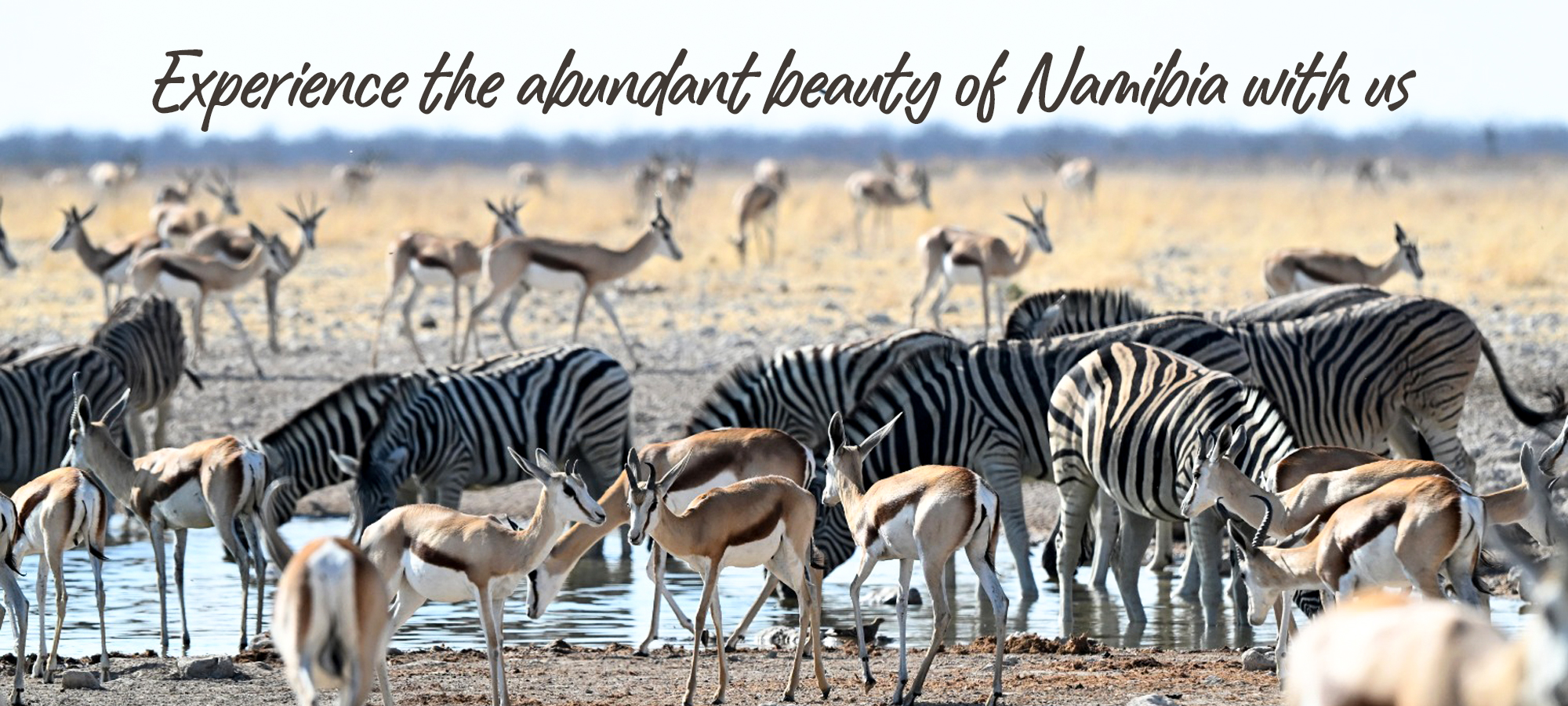
Etosha is renowned for its incredible diversity of wildlife, home to both common and rare species, including several that are threatened or endangered. With over 110 mammal species, the park boasts four of Africa’s Big Five, as well as other iconic animals such as Cheetahs, Giraffes, Spotted Hyenas, Zebras (both species), Greater Kudu, Springbok, Gemsbok (Namibia’s national animal), common Warthogs, Honey Badgers, and many more.
Etosha is not only famous for its incredible mammals but also for its impressive birdlife, with over 350 species recorded. The park is home to several regional specialties, including the Kori Bustard, Blue Crane, Violet Woodhoopoe, Ruppell’s Parrot, Pygmy Falcon, Red-necked Falcon, Bare-cheeked Babbler, Southern Pied Babbler, and both Burchell’s and Double-banded Courser. We will be on the lookout for these species during our drives through the park, as well as around the lodge grounds.
After another memorable day of wildlife viewing, we will head back to the lodge for a delicious dinner and a restful night’s sleep.
Day 10: Etosha National Park (Eastern side).
Today marks our final day in the incredible Etosha. We will once again embark on morning and afternoon game drives, returning to the lodge for lunch and a rest during the heat of the day when the animals are typically less active.
Etosha’s history dates back to 1907 when it was established as a game reserve by the governor of German South West Africa. In 1967, it was designated a national park by the South African parliament, which administered South West Africa at the time. Since then, Etosha has become one of Namibia’s most iconic attractions, drawing over 200,000 visitors annually. While it is widely celebrated as a haven for wildlife, Etosha is also a key site for understanding the evolution of early life. Fossils discovered in the hills near Halali camp date back as far as 650 million years, offering crucial insights into the region’s ancient past.
We will return to our lodge after our afternoon game drive to freshen up and have dinner together. After dinner we will head off to bed and fall asleep to the night sounds of the African bush.
Day 11: Hakusembe.
Today we leave Etosha behind and head to the Kavango region of Namibia. First, we head southeast, travelling through Thumb and Grootfontein, before heading northeast towards the town of Rundu. It is a drive of about 5 hours.
The region is named after the Kavango River, which forms the northern boundary and serves as a natural border with Angola. The regional capital of Kavango is Rundu, which is also the country’s second-largest town after Windhoek. The region is characterised by flat landscapes, savannahs, woodlands, and wetlands. The Kavango River is a vital water source, supporting agriculture, fishing, and transportation in the region.
Despite the similar names, the Kavango River and the Okavango River are not the same rivers, although they are connected. The Kavango starts in Angola and forms part of the border between Angola and Namibia. It then flows into Namibia and forms the border between Namibia and Botswana. The river eventually joins with the Zambezi River in northeastern Namibia. On the other hand, the Okavango River is formed by the confluence of the Cuito and Cubango rivers in Angola. It flows southward, crossing the Caprivi Strip in Namibia, and enters Botswana, where it forms the Okavango Delta. Therefore, while the two rivers share some geographical proximity, they are distinct rivers with different characteristics and destinations.
We will enjoy an afternoon boat cruise along the Kavango River which will give us opportunities to spot wildlife, particularly riverine animals like Hippos, Crocodiles, and a wide variety of bird species. Large herds of Elephants and Buffalo may be seen drinking at the riverbank, while other animals like Antelope might be spotted in the surrounding bush.
After our unforgettable boat cruise along the Zambezi River, where we will have soaked in the natural beauty, observed wildlife, and possibly caught a glimpse of an incredible sunset, we will return to our lodge for a well-deserved dinner. The evening will be a perfect time to reflect on the day’s experiences as we indulge in a delicious, freshly prepared meal, featuring local Namibian dishes or international cuisine, depending on your preference. The serene surroundings of the lodge offer a relaxed and peaceful atmosphere to unwind after a day of adventure.
Day 12 &13: Northwest Okavango Delta.
This morning, we will have an early breakfast as we have a long drive ahead of us today, making our way to Botswana and the Okavango Delta. The journey is a thrilling overland experience that offers breathtaking scenery and a variety of terrain. Keep an eye out for Antelopes or Elephants crossing the road as this portion passes through a variety of wildlife-rich habitats, riverine woods, and small Namibian villages.
Once we cross into Botswana at Mohembo, we will enter the northwest part of the Okavango Delta region. The northwestern region of the Okavango Delta is renowned for its captivating landscapes and a remarkable diversity of wildlife, making it an exceptional destination for mokoro excursions. Gliding through tranquil waterways lined with papyrus reeds and water lilies, one can intimately observe the Delta’s rich tapestry of life at a relaxed and meditative pace. This traditional form of transport offers a front-row seat to interactions between the Delta’s creatures and their lush habitat.
Our lodge is nestled in a large lagoon, over the next two days we will be immersing ourselves into a different way of exploring the Okavango Delta.
Mokoro trips allow close encounters with a wide range of animals, such as Elephants feeding on lush vegetation, pods of Hippos partially submerged in the channels, and Crocodiles basking on sunny riverbanks. Antelope species like Lechwe and Sitatunga may also be spotted grazing on surrounding floodplains. The journey is further enriched by the area’s prolific birdlife, featuring vibrant Kingfishers darting across the water, elegant Egrets, and the unmistakable call and majestic sight of the African Fish Eagle perched high above the waterways. This immersive experience blends tranquility with discovery, offering insight into one of the world’s most biodiverse wetlands.
After days filled with exploration, we will unwind at the lodge, taking in our surroundings. We will savour dinner together and then enjoy a restful night, serenaded by the sounds of the delta.
Day 14: Onwards to Maun.
We will have an early start this morning making our way to Maun often referred to as the “gateway to the Okavango Delta”. This leg of the trip traverses a combination of gravel roads and well-maintained tarred highways, which offers a mix of raw scenery and convenience.
As we travel, the landscape gradually shifts, revealing mopane woodlands, expansive floodplains, and clusters of traditional settlements. This route presents numerous chances to observe wildlife and an array of bird species thriving within the Delta’s ecosystem, making it highly rewarding to have your camera at the ready for memorable shots.
We will be staying along the Thamalakane River for the night. Flowing through Maun, the Thamalakane River serves as an important gateway to the expansive Okavango Delta system. It meanders through a picturesque landscape lined with dense reeds, riverine trees, and lush wetland vegetation, creating a peaceful and inviting environment. This serene waterway supports a thriving ecosystem, offering us a glimpse into the beauty and biodiversity that define the broader Delta region. The rich vegetation along the river’s edge provides both a scenic backdrop and critical habitats for numerous bird species, reptiles, and small mammals, contributing to its tranquil and ecologically rich atmosphere.
Depending on the drive we will arrive in the late afternoon having time to relax and refresh before a great dinner and a good night’s rest.
Day 15 & 16: Deception Valley.
This morning after a leisurely breakfast and depending on our charter flight departure time we will make our way to Maun Airport for our flight to Deception Valley.
Situated in Botswana’s Central Kalahari Game Reserve, Deception Valley is a mesmerizing location renowned for its vast nature and dramatic contrasts. Due to the shimmering heat mirages that give the impression that water may be ahead, this valley, which is a remnant of a long-dry ancient riverbed, has a distinctive and frequently misleading aspect.
Professional guides and Bushmen trackers lead the morning and afternoon game drives, which are conducted in open 4X4 game drive vehicles. Among the many animals we can view are the Wild Dog, Giraffe, Elephant, Blue Wildebeest, Gemsbok, Springbok, Ostrich, Zebra, Kudu, and the magnificent Black-Maned Kalahari Lion, Cheetah, and Leopard. The elusive Brown Hyena, Pangolin, Aardvark, and Aardwolf are all frequently sighted.
We will have the opportunity to experience the San people, also known as the Bushmen, who have lived in the Kalahari for thousands of years. Through guided treks, we will have the rare opportunity to learn directly from these indigenous communities, gaining insights into their deep connection with the land. The San guides share their profound knowledge of survival techniques, which have been passed down through generations, including tracking animals through the desert, identifying medicinal plants, and understanding the natural world around them. This cultural exchange is invaluable for those seeking to connect not only with the environment but also with a way of life that has remained largely unchanged for millennia.
The San’s intimate understanding of the Kalahari’s ecosystem is reflected in their ability to read subtle signs in nature, whether it’s the footprints of a predator or the hidden sources of water. These lessons not only enhance the experience of Deception Valley but also provide a unique window into a culture that is intrinsically tied to the rhythms and cycles of one of the most challenging environments on earth. We will leave with a deep appreciation for the resilience and wisdom of the San people, as well as a greater understanding of the intricate balance between human life and nature in the harsh Kalahari Desert.
After a day of adventure in the Kalahari, we will return to the lodge to relax and soak in the vast desert landscape. A delicious dinner will be served, offering local flavours and hearty dishes. Following our meal, we will retreat for a peaceful night’s rest, lulled by the quiet stillness of the Kalahari.
Day 17 & 18: Makgadikgadi Pans National Park.
Today is a travel day as we make our way to the Makgadikgadi Pans National Park.
We will be staying at an exceptional lodge located near the Makgadikgadi Pans, specifically in Gweta, about 200 kilometers from Maun. The Lodge is situated in a rare and serene corner of Botswana, offering us the chance to explore one of the country’s most remote and peaceful environments. Here, the vast salt pans extend endlessly, creating an immense, open landscape where the horizon seems to merge seamlessly with the sky. This sweeping panoramic view enhances the feeling of solitude and immersion in nature. The ancient baobab trees, some of which are over 4,000 years old, dot the landscape, playing a crucial role in both the local ecosystem and culture. Their towering presence and extraordinary age evoke a sense of wonder and reverence, making them a striking feature of the landscape
We will experience guided game drives into the Ntwetwe Pan, a key feature of the Makgadikgadi Salt Pans. Here, we might get to encounter wildlife such as desert-adapted Elephants, Bat-eared Foxes, Springbok, and, on occasion, the impressive Kalahari Lions. We will also get to see the famous Meerkats of the Kalahari.
After a day of exploration in the Makgadikgadi, we will return to the lodge to unwind and take in the breathtaking scenery. A sumptuous dinner will be served, featuring local delicacies and a selection of dishes inspired by the region. Following our meal, we will retire for the night, drifting off to sleep with the gentle sounds of the African night filling the air.
Day 19 & 20: Moremi Game reserve.
After a hearty breakfast we will make our way to Moremi Game Reserve. The Moremi Game Reserve, located in the heart of Botswana’s Okavango Delta, stands as a prime example of Africa’s unparalleled natural diversity and conservation success stories. Covering approximately 5,000 square kilometers (1,930 square miles), Moremi is often lauded as one of the continent’s most wildlife-rich and ecologically varied protected areas. The reserve offers an immersive safari experience featuring a blend of lush wetlands, open savannas, mopane woodlands, and vast floodplains. These diverse landscapes create an intricate tapestry that supports an astonishing variety of flora and fauna, making it a destination unlike any other.
Moremi is home to a wide variety of animals, including all of Africa’s “Big Five” (Lion, Leopard, Elephant, Rhinoceros, and Buffalo). White and black rhinos have been reintroduced to the reserve as part of important conservation efforts.
We will enjoy morning and afternoon game drives which offer a unique combination of thrilling wildlife encounters, luxurious comfort, expert-guided experiences, and a deep commitment to conservation. The game drives promise unforgettable moments and a deep appreciation for the Okavango Delta’s natural wonders.
After a thrilling day in Moremi, we will return to the lodge to relax and enjoy the beautiful surroundings. A delicious dinner will be served. After the meal, we will retire for the night, falling asleep to the tranquil sounds of the Moremi wilderness.
Day 21 & 22: Savuti National Park.
We will be moving on to Savuti National Park today which will bring a change in landscape once again. Savuti (or Savute) is a highly esteemed region within Botswana’s Chobe National Park, celebrated for its intense and dramatic wildlife interactions, intricate predator-prey relationships, and distinctive landscape shaped by the unpredictable behaviour of the Savuti Channel. Covering a vast area of savannas, marshes, and dry plains, Savuti stands out as one of southern Africa’s most alluring and sought-after wildlife destinations. It attracts nature enthusiasts, photographers, and researchers alike, drawn by its compelling blend of raw wilderness and concentrated animal activity.
Our game drives will be led by experienced and highly trained guides who possess a deep understanding of Savuti’s unique ecosystems, animal behaviour, and the area’s historical and geological context. These guides have honed skills in tracking wildlife, reading animal behaviour, and interpreting subtle signs in the environment, making each drive a rich educational experience.
With the sounds of the Savuti wilderness as a backdrop—distant lion roars, hyenas calling, and the night chorus of insects—dinners offer an unparalleled sensory experience. Dining in such close proximity to nature heightens the adventure and provides a deeper connection to the surroundings. Our time here will be unforgettable.
Day 23 & 24: Chobe National Park.
After a hearty breakfast and an exciting last game drive in the Savuti area, we will be making our way further north to Chobe National Park. Chobe National Park, located in northern Botswana, and is one of Africa’s premier wildlife destinations and the country’s first national park, established in 1968. Spanning an impressive 11,700 square kilometers (4,517 square miles), it offers diverse landscapes, rich ecosystems, and a spectacular concentration of wildlife, particularly known for its large elephant population.
The Chobe Riverfront is famous for its massive concentrations of wildlife. It boasts some of the largest gatherings of Elephants in Africa. During the dry season (typically May to October), herds numbering in the hundreds can be seen drinking, bathing, and crossing the river, providing a spectacular sight. Buffalo, Hippos, Crocodiles, Giraffes, Zebras, Antelopes, and numerous bird species are also commonly seen along the riverbanks.
The riverfront’s abundance of prey draws a variety of predators, including Lions, Leopards, Hyenas, and sometimes Wild Dogs. The predators’ activity around the water’s edge provides an excellent opportunity to witness hunting behaviour and predator-prey dynamics.
We will focus on boat safaris while enjoying our last two days of exploring Botswana extensively.
Day 25: Departure.
This morning you will be at leisure, depending on your onward flight times you will get a transfer to Kasane Airport for your departure.
Alternatively if you would like to visit Victoria Falls in Zimbabwe for 2 days this can be arranged. Victoria Falls, known locally as Mosi-oa-Tunya, meaning “The Smoke that Thunders,” holds the distinction of being the largest waterfall in the world by volume. As a UNESCO World Heritage Site and one of the Seven Natural Wonders of the World, its grandeur is undeniable. Yet, mere facts cannot capture the awe-inspiring sight of the immense torrent of water cascading into the Zambezi Gorge. It is a majestic and unforgettable experience, making it a bucket-list destination.