

Cape town to Namibia safari Full Itinerary
Day 1 -4 : Exploring Cape Town and surrounds.
Upon your arrival at Cape Town International Airport, a comfortable transfer will escort you to your hotel situated at the renowned V&A Waterfront, a vibrant hub that perfectly encapsulates the essence of the city.
The V&A Waterfront is one of South Africa’s most beloved destinations, offering an eclectic mix of history, entertainment, shopping, and stunning views that attract millions of visitors each year. Located in the heart of the city’s harbour, this lively area is steeped in a rich maritime heritage and is named after Queen Victoria and her son, Prince Alfred, who inaugurated the harbour in the 1860s. Today, it buzzes with an atmosphere filled with local charm as well as tourist engagement.
Cape Town itself is a fascinating destination that beautifully marries natural wonders with rich cultural history and modern attractions. Nestled between the iconic Table Mountain and the glistening Atlantic Ocean, it stands as one of the world’s most scenic cities, renowned for its breathtaking landscapes, pristine beaches, and immersive cultural experiences.
Adventure awaits as visitors ascend Table Mountain via the iconic cable car, revealing panoramic views that stretch over the city and out to sea.
A short ferry ride to historic Robben Island provides a profound glimpse into South Africa’s past, where Nelson Mandela was imprisoned for many years. The picturesque V&A Waterfront, with its myriad shops, eateries, and live entertainment, beckons with opportunities for leisurely exploration.
Wander through the charming streets of Bo-Kaap, where brightly colored houses and the rich heritage of the Cape Malay community reflect the city’s diverse cultural tapestry. A visit to Cape Town would not be complete without exploring the world-class wine regions located just a short drive away. Stellenbosch and Franschhoek are famous for their exquisite vineyards and gourmet dining experiences that draw wine lovers from around the globe.
Nature enthusiasts can venture further to the Cape of Good Hope, a stunning natural reserve teeming with wildlife, or enjoy the unique experience of spotting penguins at Boulders Beach. For those who appreciate breathtaking coastal drives, Chapman’s Peak Drive offers magnificent views that are sure to leave a lasting impression.
With its mild Mediterranean climate, dynamic art scene, and endless opportunities for outdoor activities—from hiking and surfing to cultural tours and wildlife encounters—Cape Town ensures an unforgettable experience for every traveller. Whether you wish to delve into its rich history, savour its culinary delights, or explore its natural beauty, we are dedicated to arranging every detail to fulfil your desires and create lasting memories during your stay in this iconic city.
Your itinerary can be seamlessly adjusted to maximize your experience in Cape Town. Should you wish to explore further afield, there are fantastic options available. Depending on the season, you may want to consider a visit to Hermanus, renowned for its breathtaking coastal scenery and excellent opportunities for whale watching. From June to December, this charming town becomes a prime location for observing Southern Right Whales as they migrate to the warmer waters, offering unforgettable views and incredible photo opportunities.
Additionally, if you’re visiting in September, you can venture north toward Langebaan, where the stunning wildflower season comes alive. This area showcases a breathtaking tapestry of vibrant colors as fields bloom with diverse species of flowers, creating a picturesque landscape that is truly a sight to behold. The West Coast National Park is particularly celebrated for its floral displays and provides ample opportunities for hiking, picnicking, and appreciating the natural beauty. These options, along with numerous other attractions, allow for a customizable experience tailored to your interests and the time of year, ensuring that you make the most of your stay in this remarkable region. Whether you’re drawn to the mesmerizing marine life or the striking floral vistas, we are here to help you craft an unforgettable journey in and around Cape Town.
Day 5: Onwards to Windhoek, Namibia.
Welcome to Namibia! Upon your arrival at Hosea Kutako International Airport, located just outside the capital city of Windhoek, a representative will greet you in the arrivals hall with a sign displaying your name. Once your luggage is loaded into the vehicle, you’ll enjoy a short 45-minute drive to your hotel in Windhoek.
Windhoek, the lively capital of Namibia, is a city where natural beauty meets modern charm. Surrounded by towering mountain ranges, expansive valleys, and fertile farmlands, it offers a tranquil yet vibrant atmosphere. The area is dotted with luxury lodges and guest farms, catering to travelers seeking both relaxation and adventure.
The Greater Windhoek region is characterized by its striking scenery, with wide valleys, dense scrublands, rocky hills, and sweeping golden savannahs that create a dramatic and picturesque landscape.
Perched at an impressive altitude of 1,700 meters (5,600 feet) above sea level, Windhoek is the 12th highest capital in the world. Its unique location within the Khomas Hochland plateau, cradled between the rugged Auas and Eros mountain ranges, enhances its appeal as a highland city with a pleasant climate and spectacular views.
Day 6: Sossusvlei.
After breakfast, your guide will meet you at your hotel to begin an unforgettable journey into the heart of Namibia. The drive will take us through the stunning Khomas Highland, descending the dramatic escarpment via one of the region’s scenic mountain passes. Along the way, you’ll have plenty of opportunities to stop for photographs and take in the breathtaking landscapes that define this unique part of the world. The journey to the Namib Desert, which takes approximately 4 to 5 hours, also offers a chance to spot some of Namibia’s remarkable wildlife, such as the elegant Common Ostrich, striking Gemsbok, the Pale Chanting Goshawk, and the intricate nests of Sociable Weavers. If we’re lucky, we may even catch a glimpse of a majestic Greater Kudu.
As we make our way into the Namib Desert, you’ll find yourself entering one of the most extraordinary natural landscapes on Earth. Renowned as the oldest desert in the world and home to the tallest sand dunes on the planet, the Namib is a mesmerizing sight that consistently ranks as one of the highlights of any trip to Namibia.
We will arrive at our lodge in the afternoon, leaving you some time to explore the surrounding grounds. Stroll through the lodge’s picturesque setting and keep an eye out for fascinating smaller creatures and unique desert plants. Two hours before sunset, you’ll embark on a scenic Sunset Dune Drive. This enchanting excursion provides a perfect opportunity to witness the magical desert landscape bathed in golden light while spotting wildlife such as Gemsbok, Springbok, and even the elusive Black-backed Jackal. Bird enthusiasts might catch sight of desert-adapted species, while reptile lovers can look for smaller but equally captivating creatures that call this region home.
As the sun dips below the horizon, we will return to the lodge in time for a delicious dinner, where you can reflect on the day’s adventures. Tonight’s accommodation is ideally located, providing easy access to the surrounding desert and its many wonders, ensuring you are perfectly poised for the next leg of your Namibian exploration.
Day 7: Sossusvlei.
After an early breakfast, we will set off for an exhilarating excursion to the iconic Sossusvlei and the hauntingly beautiful Dead Vlei. Our visit will span a few hours, allowing ample time to fully appreciate the breathtaking scenery and natural wonders of this remarkable area. Sossusvlei is home to the famous red sand dunes of the Namib Desert, a truly otherworldly landscape where the vibrant orange-red sands meet clear blue skies. The striking contrasts create an awe-inspiring spectacle, making this one of Africa’s most renowned natural landmarks and an absolute paradise for photographers.
A top destination in Southern Africa, Sossusvlei is an unmissable highlight of any trip to Namibia. The name “Sossusvlei” refers to the flat, clay pan where the Tsauchab River occasionally pools during rare floods, surrounded on almost every side by massive dunes that tower like silent sentinels over the landscape. Here, you’ll experience the surreal and timeless beauty of the desert.
During our visit, we’ll explore some of the most famous and fascinating features in and around Sossusvlei:
- Dune 45: Known as the most photographed dune on Earth, this striking crescent-shaped dune is located 45 kilometers from Sesriem. Its accessible slopes make it an excellent spot for those who wish to climb to the top and take in the extraordinary views of the surrounding desert.
- Hiddenvlei: For those seeking tranquility and solitude, this secluded area offers a peaceful escape amid the vast expanse of the Namib Desert. Hiddenvlei is perfect for observing the pristine desert environment in undisturbed silence.
- Big Daddy Dune: Towering over the desert landscape, Big Daddy is one of the tallest dunes in the world, standing at an impressive height of over 300 meters. Adventurous visitors can climb this colossal dune for a rewarding view of the vast desert below.
- Dead Vlei: A true photographer’s dream, this ancient clay pan is dotted with the skeletal remains of blackened acacia trees that have been dead for centuries. The stark contrast between the shimmering white salt floor, the vivid orange dunes, and the deep blue sky creates a surreal and unforgettable scene.
- Sesriem Canyon: This natural wonder is a narrow gorge carved into the earth by the Tsauchab River millions of years ago. The canyon is approximately one kilometer long and plunges up to 30 meters deep. Its name comes from the Afrikaans phrase “ses rieme,” meaning “six lengths of rope,” which refers to the six lengths of rope early settlers needed to haul water from the canyon floor. Exploring Sesriem Canyon offers a fascinating glimpse into the geological history of the region.
This excursion will give you an unforgettable opportunity to immerse yourself in the enchanting beauty of the Namib Desert, where the vastness of the landscape and the vibrant colours combine to create a truly magical experience. We will return to the lodge in time for lunch, leaving you with cherished memories of one of the world’s most unique and captivating natural environments.
Day 8: Swakopmund.
Following a relaxed breakfast at the lodge, we will head towards the coastal town of Swakopmund, passing through the vast landscapes of Namib-Naukluft Park. The drive, which takes around four hours, offers an opportunity to stop in the charming desert oasis of Solitaire to enjoy its famous Apple Pie—a cherished Namibian classic, if time allows.
Today’s drive takes us through the breathtaking Namib Sand Sea, one of Namibia’s two UNESCO World Heritage Sites. This unique coastal desert, the only one in the world with extensive fog-influenced dune fields, spans over three million hectares. Its remarkable landscape includes gravel plains, coastal flats, rocky hills, a coastal lagoon, and ephemeral rivers, creating a scene of extraordinary beauty. Fog serves as the primary water source here, supporting a unique ecosystem where endemic invertebrates, reptiles, and mammals have adapted to diverse and ever-shifting microhabitats and ecological niches.
Swakopmund, often referred to as Swakop by locals, is known as Namibia’s adventure and sports hub, but this coastal town offers much more than adrenaline-fueled activities. Nestled between the arid desert and the cool Atlantic Ocean, Swakopmund is one of Africa’s most intriguing colonial towns, blending South African, Namibian, and German influences in its architecture, culture, languages, and cuisine. Thrill-seekers can enjoy quad biking, sandboarding, kitesurfing, skydiving, angling, mountain biking, or scenic flights along the dramatic coastline. As Namibia’s most popular holiday destination, Swakopmund is loved by both locals and visitors for its relaxed vibe, excellent restaurants, charming coffee shops, wide array of activities, and pleasant climate. It will serve as our base for the next two nights.
The nearby town of Walvis Bay, Namibia’s primary harbour, is renowned for its lagoon and abundant birdlife. The Walvis Bay lagoon and salt pans are considered the most significant coastal wetland in southern Africa, hosting over 150,000 migratory birds during the summer months. This area is home to more than 150 recorded bird species, along with 11 species of chameleons, lizards, and geckos, as well as 13 mammal species, including the Pygmy Rock Mouse, Littledale’s Whistling Rat, and Setzer’s Hairy-footed Gerbil.
We will arrive at our accommodation in Swakopmund with enough time to explore the town on foot or participate in an optional adventure activity. Dinner will be at one of the town’s excellent restaurants, followed by a restful night’s sleep to prepare for another exciting day tomorrow!
Day 9: Swakopmund and Living Desert.
After enjoying breakfast in Swakopmund, we will set off on an unforgettable Living Desert Experience—a truly unique and eye-opening adventure. Accompanied by a knowledgeable local guide, we will delve into the hidden wonders of the Namib Desert, an environment that may appear barren at first glance but is teeming with life. This fascinating journey will reveal how plants and animals have evolved extraordinary adaptations to survive in one of the harshest climates on Earth.
As we explore, we’ll search for a variety of desert-dwelling creatures, including geckos, scorpions, snakes, lizards, birds, and beetles, each with its own fascinating survival strategies. Notable species we might encounter include the translucent Namib Sand Gecko, the color-changing Namaqua Chameleon, the speedy Shovel-snouted Lizard, the nimble Tractrac Chat, and the elusive Peringuey’s Adder. Alongside these animals, we’ll also discover the desert’s resilient plant life, which has developed ingenious methods to endure the arid conditions.
This immersive experience will not only deepen our appreciation of the Namib Desert’s rich biodiversity but also leave us in awe of how life persists in such an unforgiving environment.
Upon our return to Swakopmund, we will enjoy a leisurely lunch before taking the opportunity to explore the town. Optional activities include thrilling adventures such as quad biking or sandboarding. For those seeking a different perspective, we can arrange scenic flights over the stunning coastline and dunes or a relaxing boat cruise departing from Walvis Bay harbor.
Later, we’ll regroup at our lodge to freshen up before heading out to savour another delightful dinner at one of Swakopmund’s excellent restaurants. Afterward, we’ll unwind and settle in for a restful night’s sleep, ready for the adventures to come.
Day 10: Skeleton Coast and Damaraland.
Today, we journey north along the Skeleton Coast, a starkly beautiful and hauntingly named region that ranks among the most extraordinary coastal wildernesses on Earth. Stretching for approximately 500 kilometers, it protects nearly a third of Namibia’s expansive coastline. The area has long been infamous as a perilous route for sailors. Portuguese mariners once referred to it as the “Sands of Hell,” acknowledging that even if a shipwreck were survived, the unforgiving desert beyond would likely claim those stranded.
After stopping at one of the many shipwrecks along the Skeleton Coast for dramatic photographs, we will turn inland toward the breathtaking landscapes of Damaraland. On our journey, we’ll pass the towering Brandberg, or “Fire Mountain,” Namibia’s highest peak, rising to an impressive 2,573 meters (8,441 feet) above sea level.
In the distance, we’ll also catch sight of the iconic Spitzkoppe, or “Sharp Head,” one of Namibia’s most recognizable landmarks. Often called “The Matterhorn of Africa” due to its distinctive shape, this granite peak was first ascended in 1946 and has since become a favorite destination for climbers from around the world, offering numerous challenging routes.
Damaraland’s rugged terrain is home to a remarkable array of desert-adapted wildlife, including African Elephants, Black Rhinos, and Lions, all of which have adapted to thrive in this seemingly inhospitable environment. With some luck, we may encounter these incredible animals—an unforgettable highlight of our journey.
We will arrive at our lodge in time to savour a sundowner drink, taking in the stunning views of this rugged yet awe-inspiring landscape as the day comes to a close.
Day 11: Etosha South.
After an early breakfast, we will set off for Etosha National Park, a journey of approximately four hours to the northeast. The ever-changing and dramatic landscapes of Namibia will unfold before us as we travel, with plenty of opportunities to stop along the way for photography and to soak in the breathtaking scenery.
We will arrive at our lodge on the southwestern edge of Etosha in the late afternoon, where we’ll settle into our accommodation and prepare for the adventures ahead. Etosha National Park, one of Africa’s premier wildlife reserves, spans a staggering 22,300 km² (8,620 sq mi) in north-central Namibia. Known for its iconic wildlife and vast open spaces, the park takes its name from the enormous Etosha Pan, a salt flat roughly 130 kilometers long and 50 kilometers wide. This “great white place” is thought to have formed over 100 million years ago, and its shimmering surface is a striking feature of the park.
As the day winds down, we will enjoy a delicious dinner followed by time around the campfire, sharing stories and reflecting on the incredible journey so far. Before retiring for the night, don’t forget to look up—the African night sky here, far removed from city lights, is nothing short of spectacular, offering an unforgettable stargazing experience.
Day 12: Etosha South.
Today, we will embark on both morning and afternoon game drives in the renowned Etosha National Park, taking a break during the heat of the day to return to our lodge for lunch and some well-deserved relaxation. With your guide’s expertise and your input regarding your wildlife and plant interests, the best routes will be selected to maximize our chances of extraordinary sightings. Our experienced guides know Etosha inside out and are committed to showcasing the very best this magnificent park has to offer.
Etosha boasts an astonishing diversity of wildlife, hosting over 110 mammal species, including four of Africa’s Big Five—Lion, Elephant, Leopard, and Black Rhino—alongside an array of other iconic species. You might spot Cheetahs sprinting across the plains, towering Giraffes browsing acacia trees, Spotted Hyenas patrolling for prey, or herds of Zebra (both Plains and Mountain species). Other highlights include Greater Kudu, Springbok, Gemsbok (Namibia’s national animal), Common Warthogs, and even elusive species such as the Honey Badger.
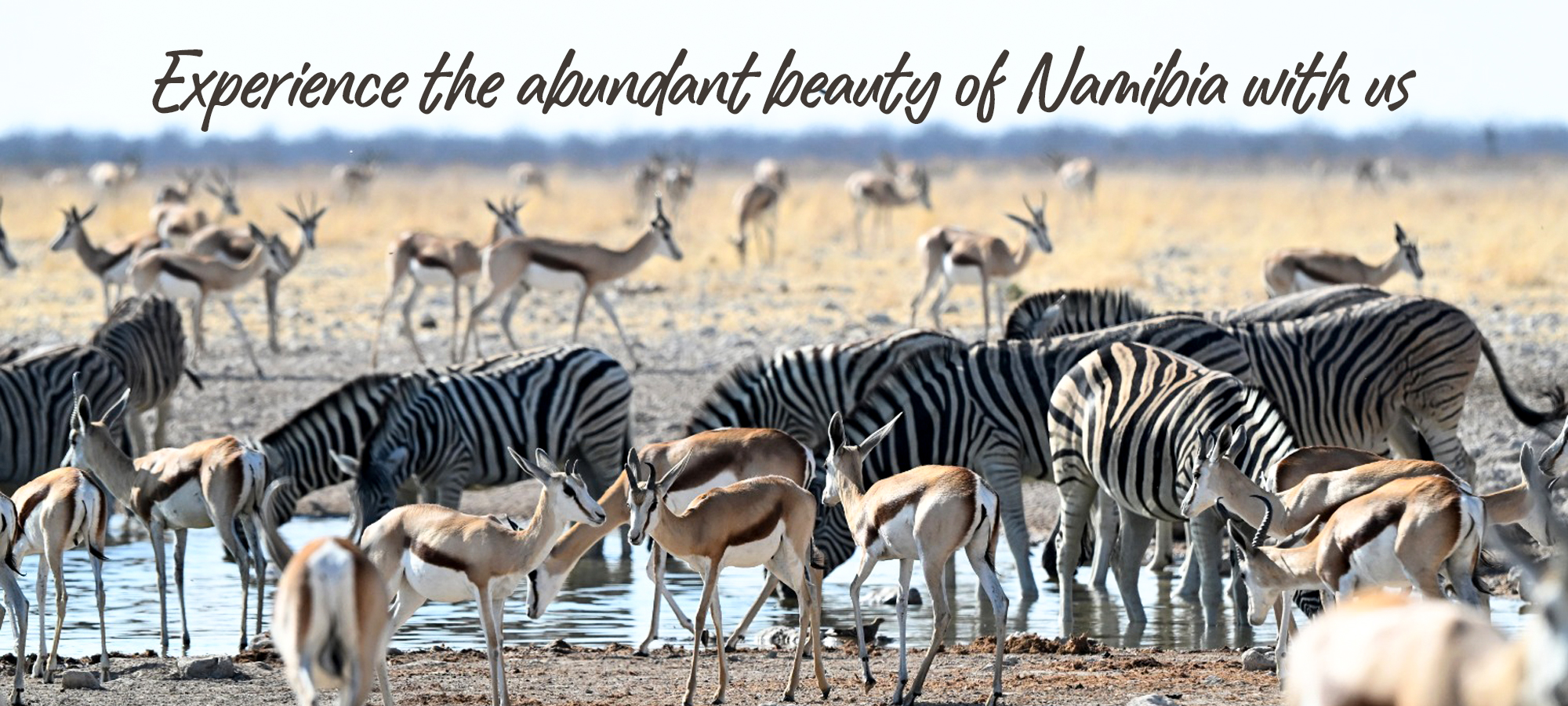
One of Etosha’s most remarkable features is its network of waterholes, vital lifelines in this arid environment. During the dry season, nearly all of the park’s wildlife gravitates toward these waterholes to drink, inevitably attracting predators on the hunt. This creates a unique opportunity to park and observe the unfolding drama of predator-prey interactions and herds peacefully coexisting—a spectacle rarely found in other reserves across southern or eastern Africa.
As the sun sets, we’ll return to the lodge to freshen up and savour another delicious dinner. Afterward, we’ll gather around the campfire, sharing stories and highlights from the day’s sightings. Before heading to bed, take a moment to marvel at the glittering African night sky, an awe-inspiring canopy of stars undisturbed by urban light pollution—a fitting end to a memorable day in the wild.
Day 13: Etosha South.
Today, we have another full day to explore the wonders of Etosha National Park, but we will gradually begin making our way toward the eastern side of the park, where we will stay for the next two nights.
While Etosha is renowned for its incredible mammal populations, it is also a haven for birdwatchers, with over 350 species recorded. The park is home to a number of regional rarities, including the Kori Bustard, Blue Crane, Violet Woodhoopoe, Rüppell’s Parrot, Pygmy Falcon, Red-necked Falcon, Bare-cheeked and Southern Pied Babblers, as well as the Burchell’s and Double-banded Coursers. As we traverse the park and explore around our lodge, we will keep an eye out for these elusive species, adding a new dimension to our wildlife experience.
For photography enthusiasts, Etosha is a dream come true. The park offers a unique play of light, color, and texture, making for dramatic and stunning images. Many guests have captured their “lifer shots” of African wildlife and birds right here. The sunrises and sunsets in Etosha are particularly breathtaking, painting the sky in vibrant hues, so be sure to have your cameras and phones ready to capture these magical moments.
After another day filled with remarkable wildlife encounters and spectacular scenery, we will return to our lodge to enjoy a delicious dinner, followed by a peaceful night’s rest in preparation for tomorrow’s adventure.
Day 14: Etosha South.
Today marks our final day in the captivating Etosha National Park. We will once again embark on morning and afternoon game drives, returning to the lodge during the midday heat when wildlife tends to be less active, giving us time to relax and enjoy a leisurely lunch.
Etosha’s history is as rich and fascinating as its wildlife. Originally designated a game reserve in 1907 by the governor of German South West Africa, it was later designated as a national park in 1967 by an act of the Republic of South Africa, which administered the region at the time. Since then, Etosha has become one of Namibia’s premier destinations, attracting over 200,000 visitors annually. While the park is famous for its impressive variety of animals, it also holds significant historical and scientific value. The hills near Halali camp have revealed fossils dating back over 650 million years, offering critical insights into the existence and evolution of ancient life forms.
In the late afternoon, we will return to our lodge, take time to freshen up, and gather for our final dinner together. It will be a chance to reflect on the unforgettable experiences we’ve shared during our time in Etosha and bid farewell to this remarkable wildlife haven.
Day 15: Departure.
After an early morning game drive or a relaxed final breakfast together, we will begin our journey back to Windhoek. The drive southwards to Namibia’s capital will take approximately 5 to 6 hours, offering a final opportunity to enjoy the scenic beauty of the country.
Once in Windhoek, we will escort you to Hosea Kutako International Airport for your return flight home. Alternatively, if you’ve chosen to extend your adventure with a visit to the Caprivi, Victoria Falls, Botswana or Zambia, we’ll assist with arrangements for your connecting flight. Should you require an overnight stay in Windhoek before your next departure, we’d be happy to assist with accommodation options. Your journey may be coming to an end, but the memories of this unforgettable safari will stay with you long after you leave.