

Next Group dates
- To be confirmed
This Safari can be customized and booked for any dates as per your travel plans
Experience the ultimate Southern African safari on our 11-day Etosha, Caprivi, Chobe & Victoria Falls tour. Witness Etosha National Park’s extraordinary wildlife, explore the wetlands and rivers of Caprivi’s Bwabwata National Park, marvel at Chobe National Park’s massive elephant herds, and end at the awe-inspiring Victoria Falls on the Zambia-Zimbabwe border. This unforgettable safari combines diverse landscapes, iconic wildlife, and one of the world’s greatest natural wonders, perfect for nature lovers, photographers, and adventure seekers.


Day 1: Windhoek to Etosha National Park
After breakfast at your Windhoek hotel, we load luggage and depart north toward Etosha National Park, the first highlight of this safari. Windhoek, Namibia’s capital, sits at 1,700 meters on the Khomas Hochland plateau, surrounded by mountains, valleys, and farmlands. It enjoys over 300 sunny days per year and offers nearby reserves like Daan Viljoen Game Reserve and Na’ankuse.
The drive to Etosha takes about 4–5 hours. Along the way, we pass through Okahandja, known as Namibia’s “garden town,” and near Okonjima Nature Reserve and Waterberg Plateau National Park. We also drive through Otjiwarongo and Outjo, gateways to conservation projects like the Rare and Endangered Species Trust (REST).
We make stops to stretch and refresh, arriving at our lodge near the Andersson Gate. If time allows, we enjoy a short game drive in the park. Dinner at the lodge introduces Namibian cuisine, followed by a restful night under the stars.
Day 2: Etosha National Park – Southwestern Side
Today we explore Etosha’s southwestern region. A morning game drive follows breakfast, with a return to the lodge for lunch and a midday break.
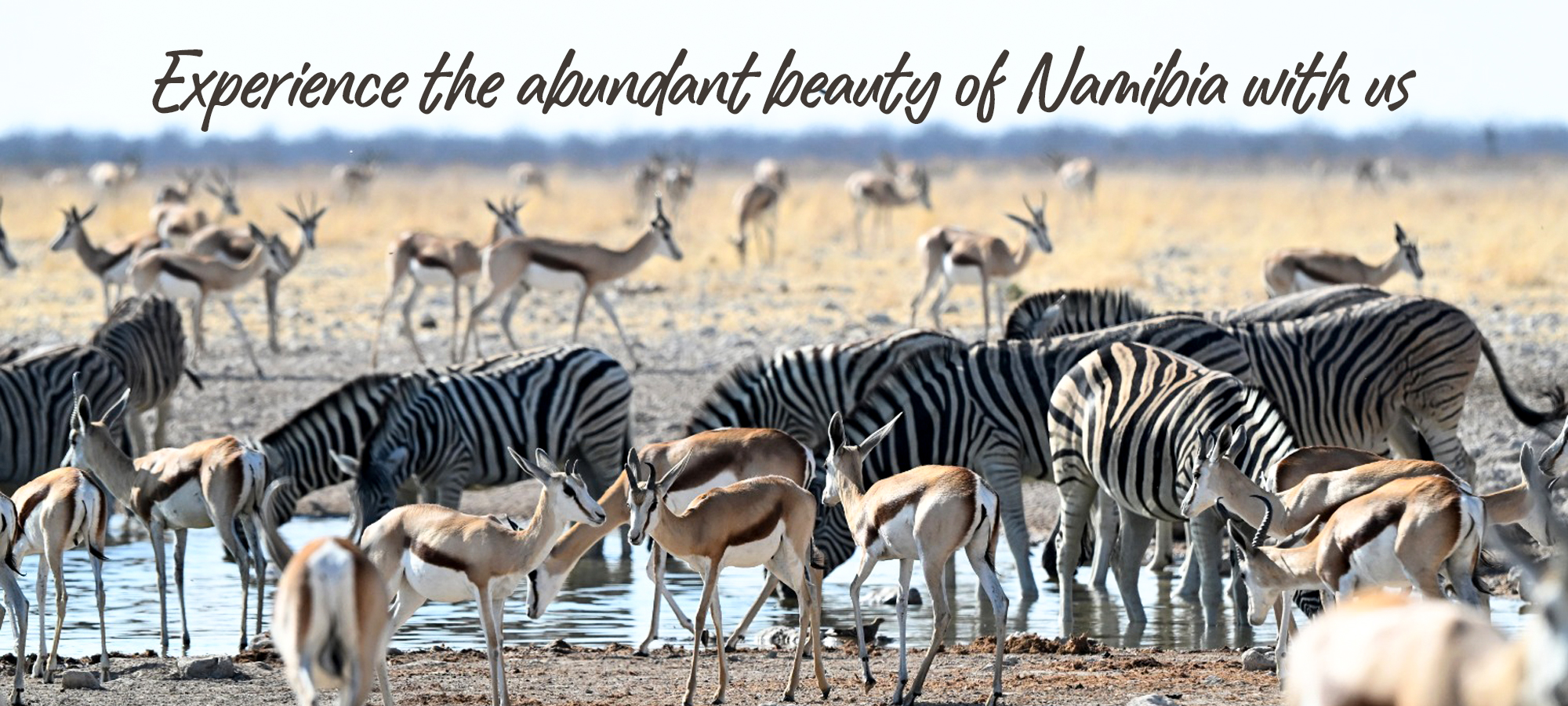
Etosha National Park, covering over 22,300 km², is renowned for its vast dry salt pan, called the “great white place.” It hosts more than 110 mammal species, including African Elephant, Lion, Leopard, Cheetah, Black Rhinoceros, and Gemsbok. Waterholes offer exceptional wildlife viewing, as animals gather and predators follow.
Afternoon game drives bring more wildlife encounters. Return to the lodge for dinner, then marvel at the pristine African night sky.
Day 3: Etosha National Park – Southwestern to Eastern Side
We continue Etosha exploration today while transitioning to the eastern side of the park. A stop at Halali Camp provides lunch.
Our guides tailor the route based on your wildlife interests. The park’s vegetation includes Mopane scrub, Red Bushwillow, and unique Moringa ovalifolia “ghost trees.” Birdwatchers will enjoy over 350 species, including Kori Bustard, Secretarybird, Violet Woodhoopoe, and Monteiro’s Hornbill.
Smaller mammals like Meerkat, Yellow Mongoose, and Temminck’s Ground Pangolin are also possible sightings. We overnight near the Von Lindequist Gate, sharing stories by the campfire under another magnificent night sky.
Day 4: Etosha National Park – Eastern Side
Today features morning and afternoon game drives in Etosha’s eastern region. Etosha was declared a game reserve in 1907 and a national park in 1967. Its floodlit waterholes near camps offer unforgettable wildlife encounters close to the lodge.
Photographers will appreciate the dramatic light, colours, and textures at sunrise and sunset. After an exciting day, return to the lodge for dinner and rest. Tomorrow, we head to the lush Caprivi Strip.
Day 5: The Okavango River – Caprivi Strip
After breakfast, we drive northeast toward the Caprivi Strip, a green and water-rich contrast to Etosha. The Caprivi, a fertile corridor of rivers and wetlands, borders Botswana, Zambia, and Angola. Its major rivers include the Okavango, Kwando, and Zambezi.
Our lodge sits on the Okavango River with breathtaking views. Depending on arrival time, options include a late game drive in Bwabwata National Park or a sundowner boat cruise on the river. Dinner is served at the lodge while listening to hippos along the riverbanks.
Day 6: Bwabwata & Mahango National Parks
After breakfast, we explore Bwabwata and Mahango National Parks, part of the Kavango-Zambezi Transfrontier Conservation Area (KAZA). These parks feature floodplains, riverine woodlands, and swamps, with trees like Zambezi teak, wild seringa, and camelthorn.
Wildlife includes African Elephant, Buffalo, Lion, Leopard, African Wild Dog, Cheetah, Hippopotamus, Sable, Roan, Lechwe, and Sitatunga. Bird enthusiasts can spot nearly 450 species, including Wattled Crane, Black-winged Pratincole, African Skimmer, and Allen’s Gallinule.
Lunch and dinner are enjoyed at the lodge while taking in river views and reflecting on the day’s wildlife encounters.
Day 7: The Kwando River
After breakfast, we drive east along the Caprivi to a lodge on the Kwando River. The river flows from Angola into Botswana, eventually joining the Zambezi River.
Afternoon activities include game drives and boat cruises in Bwabwata or Mudumu National Park, searching for elephants, lions, leopards, hippos, giraffes, sable antelope, and birds like Rufous-bellied Heron and Southern Ground Hornbill. Return to the lodge for dinner and rest.
Day 8: Chobe National Park – Botswana
After breakfast, we travel to Kasane and cross into Chobe National Park, Botswana. Chobe covers 12,000 km² and features diverse ecosystems, including grasslands, woodlands, and wetlands.
Kasane offers panoramic views of the Chobe River and is a prime base for wildlife viewing. Evening sundowners reveal elephants along the riverbank. Dinner at the lodge concludes a memorable day.
Day 9: Chobe National Park
A full day of exploration includes game drives and a river cruise. Chobe hosts Africa’s largest elephant population, estimated at 80,000.
Other wildlife includes African Buffalo, Lion, Leopard, Cheetah, Hippo, Zebra, Sable Antelope, and Lechwe. Birding highlights include Southern Carmine Bee-eater, African Spoonbill, Racket-tailed Roller, and Copper Sunbird. Return to the lodge for dinner and overnight stay.
Day 10: Victoria Falls – Zimbabwe
After breakfast, we drive 80 km to Victoria Falls, also known as Mosi-oa-Tunya (“The Smoke That Thunders”). A UNESCO World Heritage Site, the falls are the largest in the world by volume and one of the Seven Natural Wonders.
Optional activities include:
- Helicopter flights over the falls
- Bungee jumping
- Sundowner boat cruises on the Zambezi
- Half-day birding around town
Dinner is independent, with restaurant recommendations available.
Day 11 – Departure
After a relaxing final breakfast you will be transferred to the nearby Victoria Falls International Airport for your homeward flight, or for your connecting flight to another southern African safari destination (please arrange you transfer directly with your lodge or hotel – this is for your own account).
We can easily extend this safari to include some of the fantastic parks in Zambia, Zimbabwe, Botswana or South Africa. Please enquire and we will gladly assist.