
Guide – Marc Cronje
Windhoek – Okonjima
We departed Windhoek and set off on the picturesque journey north to Okonjima, the home of the Africat Foundation. Along the way, we made a few stops, including a coffee break by the roadside, where we spotted Southern Giraffe, Oryx, Impala, Greater Kudu, Springbok, Yellow Mongoose, and Common Warthog—what a great way to kick off the trip! We also spotted some remarkable birds, including the Rosy-faced Lovebird, Black-faced Waxbill, European Roller, Violet-backed Starling, Violet-eared Waxbill, Crimson-breasted Shrike, Rock Kestrel, Barred Wren Warbler, Monteiro’s Hornbill, Capped Wheatear, and Booted Eagle.

At Okonjima, we had a busy agenda ahead, including Leopard tracking, Pangolin tracking, and several exciting game drives and night excursions. After arriving in the afternoon, we settled into our rooms and then made our way to the waterhole in front of the lodge to see who might be visiting. Springbok, Common Duiker, Steenbok, Warthog, and Common Impala were all spotted.
As the sun began to set, we bundled up in warm clothes and hopped onto our open game drive vehicle for our first activity—Leopard tracking! Okonjima has several collared Leopards for research, and we were hoping for a sighting. After about 45 minutes of tracking, we stumbled upon a Leopard lounging near a natural water pool. This turned out to be an uncollared Leopard, not the one we were tracking, but it was an unforgettable sighting! We spent 45 minutes observing this majestic male before heading off to enjoy a stunning sunset. This sighting would end up being one of three Leopard encounters on the reserve. We also had excellent views of Black-backed Jackal, Steenbok, Common Duiker, Oryx, Common Impala, Springbok, Hartman’s Mountain Zebra, Plains Zebra, Greater Kudu, Warthog, and Blue Wildebeest. Afterward, we returned to the lodge for dinner, eagerly awaiting the news that our next activity, Pangolin tracking, was confirmed.
Pangolin tracking was a truly unforgettable experience. While sightings aren’t guaranteed, it’s your best chance to see these rare creatures. Just after finishing dinner, our guide arrived with the green light, and we were off! After a short walk through the bush, we found a 13-week-old Pangolin, an incredible sighting. This rare moment will be one of my top wildlife memories. We stayed with the Pangolin briefly, capturing some great photos before leaving it to continue foraging.
On our drive back, we had fantastic sightings of Brown Hyena, a family of Bat-eared Foxes, and a Spotted Eagle Owl, which was a welcome addition to the bird list.

The following morning began before sunrise, coffee in hand and a freshly baked muffin in the other, as we reminisced about the previous night’s extraordinary experience. Our morning game drive focused primarily on endangered species, and it did not disappoint. We had incredible sightings of a pair of White Rhinos and a young female Leopard attempting to hunt Impala. Adding to the excitement, we also saw Red Hartebeest and Sable Antelope. The birding was equally impressive, with sightings of Peregrine Falcon, Great Spotted Cuckoo, Acacia Pied Barbet, Black-chested Prinia, Shaft-tailed Whydah, Rockrunner, Southern Pied Babbler, Garden Warbler, Ashy Tit, African Hawk Eagle, Short-toed Rock Thrush, and Black Cuckoo.
After a late night and an early start, we enjoyed some downtime during the midday heat, recharging for the night drive ahead. In the late afternoon, we gathered for sundowners on the lodge deck overlooking the waterhole, where Springbok, Common Duiker, Sable with calves, Warthog with piglets, and a group of Banded Mongoose came down to drink.
Appetites satisfied; we climbed into the game drive vehicle to see what the night would bring. The night drive was a success, offering sightings of Brown Hyena, Bat-eared Fox, Savanna Hare, Springhare, Black-backed Jackal, and Small-spotted Genet. A thrilling sighting of an African Rock Python added to the adventure.


It was time to say goodbye to Okonjima and continue our journey north to Grootfontein. This stop is frequented by a large group of Southern Lesser Galago’s, a species high on our target list. We arrived late in the afternoon and were greeted by a family of Damara Dik-dik with a calf—a delightful introduction to the area. The resident, Black-faced Babblers put on a fantastic show as well.
We made our way to the deck area, eagerly awaiting the arrival of the Southern Lesser Galago’s. After some patience, we were rewarded with great views of these adorable primates. After dinner, we took a short walk to the waterhole hide on the property, where we spotted Greater Kudu, Oryx, Warthog, Common Duiker, Steenbok, Red Hartebeest, Common Eland, and Common Impala.


Mahangu National Park
Our day began on a high note with a sighting of a Small-spotted Genet at the waterhole at Roy’s just before sunrise. A short walk gave us great views of Golden-tailed Woodpecker, African Pygmy Kingfisher, Grey-backed Camaroptera, Kalahari Scrub Robin, and Chestnut-vented Warbler—what a treat! We also had a memorable sighting of a pair of Verreaux’s Eagles.
After bidding farewell to Roy’s, we continued our journey north to the Zambezi region, home to Africa’s legendary ‘Big 5.’ Boat trips offer a unique perspective for wildlife viewing, and ours provided sightings of Hippo, Buffalo, Waterbuck, Greater Kudu, Warthog, Crocodile, and Bushbuck. The birding was equally impressive, with sightings of African Fish Eagle, White-browed Coucal, Chirping and Luapula Cisticola, Long-toed Lapwing, African Pygmy Goose, Swamp Boubou, African Jacana, Knob-billed Duck, Western Banded Snake Eagle, Little Bittern, Allen’s Gallinule, Squacco Heron, African Openbill, Pied Kingfisher, Southern Carmine, White-fronted Bee-eater, and Little Bee-eater.
Dining under the stars by the Kavango River, accompanied by the sound of a male Lion roaring, was an unforgettable experience. A short night walk through the camp revealed a Large-spotted Genet, Savanna Hare, and a Southern Lesser Galago.


Bwabwata National Park and Mahangu National Park
We started early the next morning with coffee before heading into Bwabwata National Park for a morning game drive. The first sighting of the day was a massive male Lion lying in the road, allowing us to spend some time with this incredible cat with no other vehicles around. Other highlights included Elephant, Buffalo, Red Lechwe, Chacma Baboon, Slender Mongoose, Common Impala, Greater Kudu, Warthog, Sable, and Malbrouck Monkeys. Bwabwata is one of my favorite parks in Namibia, especially since we didn’t see another car all morning.
Breakfast with a herd of 200+ Buffalo made for a memorable experience. The birding in the park was exceptional as well, with sightings of Lesser Jacana, Lesser Moorhen, Meves’s Starling, Verreaux’s Eagle Owl, Woodland Kingfisher, Black Cuckooshrike, African Hoopoe, African Green Pigeon, Mosque Swallow, Hamerkop, Collared Sunbird, Meyer’s Parrot, and a variety of Cuckoos.
After a break during the heat of the day, we headed to Mahangu NP for an afternoon game drive, where we had great views of a herd of Elephants drinking and playing in the river. A small herd of Roan Antelope was also a highlight, as well as a pair of Wattled Cranes and a White-backed Night Heron. Our night drive in the area yielded sightings of Side-striped Jackal, Hippopotamus out of the water, Savanna Hare, and White-tailed Mongoose.

Kavango River and Etosha National Park
Our last morning in the area began with a boat trip along the Kavango River, where we observed a troop of Malbrouck Monkeys coming down from their roost in a large Marula tree. We also saw Elephant, Crocodile, Buffalo, Hippo, Common Impala, Black-backed Jackal, Sable, Waterbuck, and Red Lechwe. The highlight of the trip, however, was a large Black Mamba sunning itself on the reeds along the riverbank, much to the distress of the local birdlife!
After bidding our farewells, we headed south to Etosha National Park for the next phase of the adventure.
We arrived rather late in the afternoon, because of the long drive it was decided we would have an early dinner, chat about our great time in the Caprivi and what to expect over the next few days in Namibia’s flagship National Park. A short night drive rewarded us with a close-up sighting on two Bat-eared foxes walking on the road soon followed by a Cape Porcupine.


Etosha East
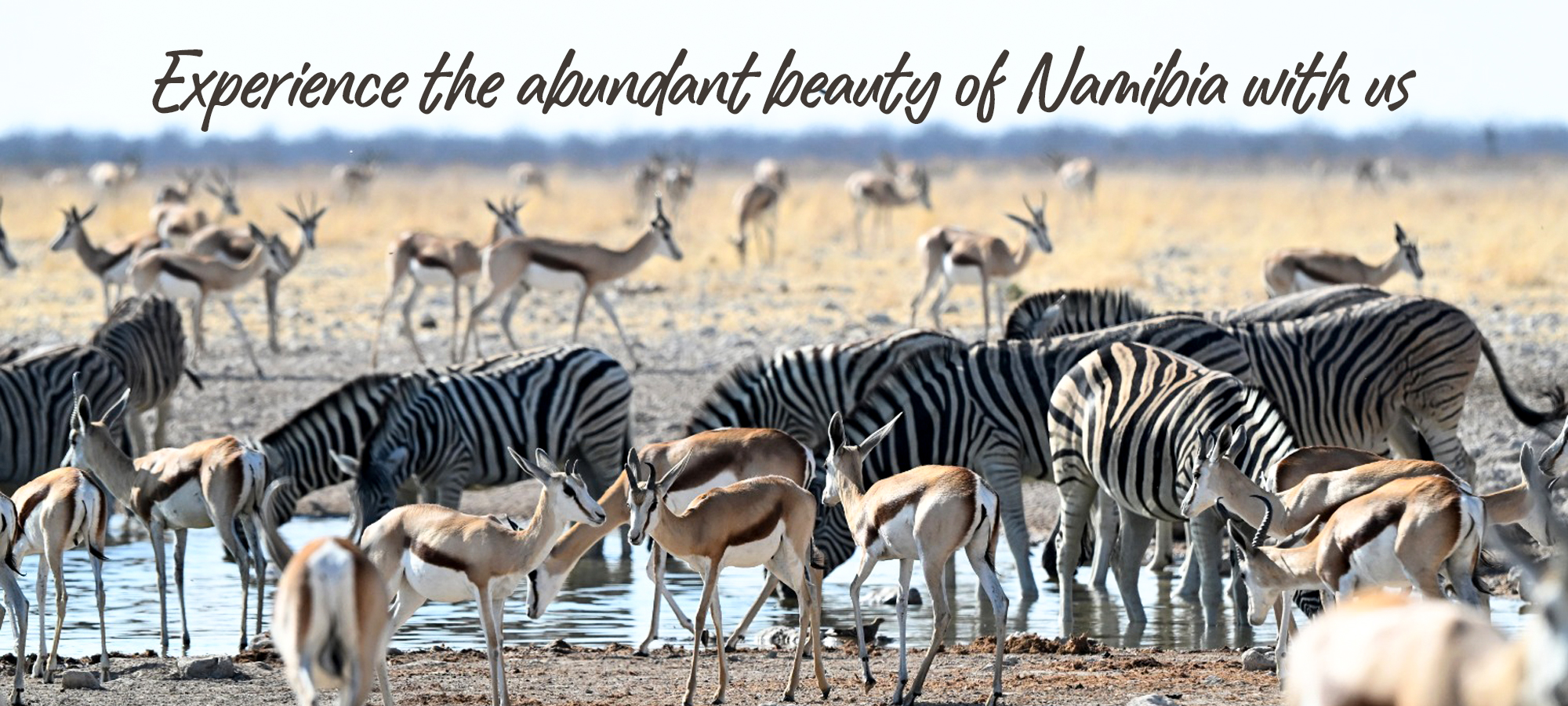
As we ventured into the park, a beautiful sunrise welcomed us. Just 200 meters in, we encountered a small bachelor herd of Black-faced Impala. This often-overlooked antelope is an endangered species, with the majority of the estimated 3,000 individuals remaining on Earth living in Etosha National Park and the northeastern regions of Namibia. Common species we observed included Blue Wildebeest, Burchell’s Zebra, Damara Dik-dik, Greater Kudu, Steenbok, Springbok, and Oryx. A small clan of Spotted Hyenas at Klein Namutoni waterhole was a bonus.
The highlight of the morning came when a Cheetah and its sub-adult cub appeared, strolling across the open land and pausing for perfect photos. The soft morning light, combined with the Cheetah climbing a termite mound, created a memorable sighting and some excellent photographic moments.
Birdlife was impressive as well, with notable sightings including Kori Bustard, Tawny Eagle, Monotonous Larks calling in unison, Double-banded Courser, Namaqua Sandgrouse, Bateleur, South African Shelduck, Northern Black Korhaan, Cape Teal, Great White Pelican, and Black-chested Snake Eagle. It was an incredibly successful first morning in Etosha.
After a break at the lodge to escape the midday heat, we returned to the park in the afternoon. While mammal sightings were quieter, we were treated to a female lioness crossing the road just before we reached the gate in the late afternoon. The park, having received good rainfall, provided a variety of bird sightings around Fisher’s Pan, with a Painted Snipe being a major highlight. Other birds observed included Greater Flamingos, Black-necked Grebe, Red-breasted Swallow, Blue Crane, and Long-tailed Paradise Whydah. A male White Rhino rounded off a fantastic day in the African bush.
After dinner, we set out on a night drive, which didn’t disappoint. We spotted Black-backed Jackals, a Porcupine, and a Southern Lesser Galago. It was a wonderfully successful day in Etosha’s east.

Etosha East to Okaukuejo
By now, we had established a morning routine—up before sunrise, a quick coffee, and then off to explore. The morning drive began with a pair of mating lions right on the road, soon after entering the park. We also encountered Black-faced Impala, Blue Wildebeest, Greater Kudu, Oryx, Springbok, Steenbok, South African Ground Squirrel, Banded Mongoose, and Black-backed Jackal. Bird sightings included African Grey Hornbill, Secretarybird, European Bee-eaters, Rufous-eared Warbler, Acacia Pied Barbet, Gabar Goshawk, Yellow Canary, Abdim’s Stork, and various vultures.
As the sun climbed and the heat intensified, the bush quieted down, but we had an exciting surprise—a Black Rhino appeared right on the road! It was a great moment, as we were the only vehicle present, and we enjoyed spending time with this magnificent, endangered animal.
Lunch at a picnic spot overlooking the Etosha Pan was refreshing before continuing our drive south through the park. We saw more Greater Kudu, Plains Zebra, Black-faced Impala, Springbok, Blue Wildebeest, and Common Duiker.
An easy check-in allowed for an earlier dinner, as we had a night drive planned. Shortly after leaving the gate, we encountered two male lions strolling down the road—what an impressive sight! Our night drive also brought sightings of Black-backed Jackal, Black Rhino, Cape Fox, and a variety of ungulates.
The following day, we focused on southern Etosha, where we were fortunate to witness a rare sight—two Black Rhinos mating in the open. We also observed Greater Kudu, Red Hartebeest, Blue Wildebeest, Oryx, Steenbok, Springbok, Plains Zebra, Cape Fox, Black-faced Impala, and Black-backed Jackals. We spent time watching Sociable Weavers at their impressive nests in camp.

Southern Etosha to Brandberg Area
Next, we headed toward the Brandberg area, leaving the tar roads behind in favor of dirt tracks for the rest of our journey. A relaxing lunch in the shade of a Mopani tree provided us with a rare sighting of one of Africa’s smallest birds, the Cape Penduline Tit, along with a playful family of South African Ground Squirrels. On our way to the lodge above the Ugab River, we saw Benguela Long-billed Lark, Ruppell’s Korhaan, and Herero Chat.
An afternoon walk along the Ugab River was delightful, with highlights such as Verreaux’s Eagle, Alpine Swift, Dusky Sunbird, Ruppell’s Parrot, Brubru, Tractrac Chat, and Mountain Wheatear. After some patient scanning of the rocky outcrops, we located our main target mammal—the near-endemic Damaraland Ground Squirrel. Both species of Ground Squirrel are endemic to Southern Africa, but the Damaraland variety has a much smaller range and is mostly solitary, making it harder to find.
That evening’s night drive after a delicious dinner produced excellent sightings of active Springhares, a Small-spotted Genet, and a Cape Fox.


Brandberg Area to Erongo Mountains
Our day started with coffee and a breathtaking sunrise before we explored the Ugab River. The previous night, some of us had spotted an Elephant bull walking near the lodge, and we tried following its tracks, but the Elephants eluded us. The area had received good rain, and part of the river remained full of water. We were treated to a flock of Bare-cheeked Babblers during our search.
Next, we made our way to the Erongo Mountains, one of my favourite places in Namibia. After settling in at our lodge, we headed out for a walk, only to be spotted by a troop of Chacma Baboons. Their warning calls echoed across the mountains. Other sightings included Dassie Rat, Bushveld Sengi, and Steenbok. Our main target here was the endemic Black Mongoose, and with patience, we were rewarded with a great sighting of this stunning animal. Nature had another surprise in store—while scanning the rocks for Hartlaub’s Spurfowl, we stumbled upon a female Leopard observing the area. Finding a Leopard in such a wild and remote location was an extra-special treat, as these Leopards are less accustomed to humans than those in the larger parks.
Birding in the area was fantastic, with highlights including Familiar Chat, Rosy-faced Lovebird, Cape Bunting, Freckled Nightjar, Western Barn Owl, Spotted Eagle Owl, Rockrunner, Hartlaub’s Spurfowl, Chestnut Weaver, Ruppell’s Parrot, White-tailed Shrike, Pearl-spotted Owlet, and Augur Buzzard.
At dinner, we watched a prickle of Porcupines (such a charming collective noun) visit the small waterhole in front of the lodge—mom, dad, and a little one. As dessert was served, a Small-spotted Genet joined the party. It was a dinner with truly unique African guests!


Erongo Mountains to Swakopmund
The next day, we journeyed to Swakopmund, a coastal town where we would take a boat trip from Walvis Bay on our final day. The change from the desert landscape to the ocean was striking. Afternoon birding at the salt works and lagoon yielded sightings of Common, White-winged, Sandwich, Caspian, Greater Crested, and Damara Terns, African Oystercatcher, Chestnut-banded Plover, Ruddy Turnstone, Hartlaub’s Gull, Cape Cormorant, Gray’s Lark, Orange River White-eye, Eurasian Curlew, Kelp Gull, thousands of Flamingos, and various sandpipers.
Our boat trip was a highlight, with hundreds of Cape Fur Seals and the near-endemic Heaviside Dolphin swimming alongside the catamaran. Heaviside Dolphins are the smallest of their species and are found only in the cold waters off Southern Africa’s west coast. To cap it all off, we were lucky enough to witness a Humpback Whale, breaching and tail-slapping close to the boat—a truly magical experience.
This trip was an unforgettable journey through Namibia’s diverse ecosystems, and I’d like to thank the group for being such wonderful companions. We shared many laughs, and it was an incredible 15 days exploring Namibia’s wildlife, birds, and breathtaking landscapes. We left with tears in our eyes, having had the time of our lives. Thanks also to Nature Travel Namibia for ensuring everything ran smoothly. I look forward to my next mammal trip in this amazing country.

Full list of species:
Bushveld Sengi – Elephantulis intufi
Pygmy hairy-footed Gerbil – Gerbillurus paeba
Elephant – Loxodonta africana
Rock Hyrax – Procavia capensis
Southern Lesser Galago – Galago moholi
Malbrouck Monkey – Chlorocebus (Cercopithecus) cynosuros
Chacma Baboon – Papio ursinus
Cape Hare – Lepus capensis
Savanna Hare – Lepus microtis
Springhare- Pedetes capensis
Porcupine – Hystrix africaeaustralis
Dassie Rat – Petromus typicus
Tree Squirrel – Paraxerus cepapi
Striped Tree Squirrel – (Funisciurus Confucius)
Southern African Ground Squirrel – Xerus inauris
Damara Ground Squirrel- Xerus princeps
Cheetah – Acinonyx jubatus
African Wild Cat – Felis silvestris cafra
Lion – Panthera leo
Leopard – Panthera pardus
Yellow Mongoose – Cynictis penicillata
Banded Mongoose – Mungos mungo
Slender Mongoose – Galerella (Herpestes) sanguinea
White-tailed Mongoose- Chneumia albicauda
Black Mongoose- Herpestes (Galerella) nigrata
Suricate (Meercat) – Suricata suricatta
Brown Hyena – Hyaena brunnea
Small Spotted Genet – Genetta genetta
Large Spotted Genet – Genetta maculata
Black Backed Jackal – Canis mesomelas
Side-striped Jackal- Canis adustus
Bat eared Fox – Otocyon megalotis
Cape Fox – Vulpes chama
Cape fur Seal – Arctocephalus pusilus
Ground Pangolin – Smutsia (Manis) temminckii
Plains Zebra – Equus quagga
Hartmans mountain Zebra – Equus zebra hartmannae
White Rhino – Ceratotherium simum
Black Rhino – Diceros bicornis
Common Warthog – Phacochoerus africanus
Hippopotamus – Hippopotamus amphibious
Impala – Aepyceros melampus
Black faced Impala – Aepyceros melampus petersi
Red Haartebeest – Alcelaphus (buselaphus) caama
Springbok – Antidorcus marsupialis
Blue Wildebeest – Connochaetes taurinus
Tsessebe – Damaliscus lunatus
Sable – Hippotragus niger
Roan- Hippotragus equinus
Waterbuck – Kobus ellipsiprymnus
Red Lechwe – Kobus leche leche
Damara Dik Dik – Madoqua damarensis
Oryx – Oryx gazella
Steenbok – Raphicerus campestris
Common Duiker – Sylvicapra grimmia
Bushbuck – Tragelaphus sylvaticus
Greater Kudu – Tragelaphus strepsiceros
Common Eland – Tragelaphus oryx
Giraffe – Giraffa camelopardalis
African Buffalo – Syncerus caffer
Haviside Dolphin – Cephalorhynchus heavisidii
Humpback Whale- Megaptera novaeangliae
Straw-coloured Fruit-bat – Eidolon helvum
Peters’s Epauletted Fruit-bat- Epomophorus crypturus